
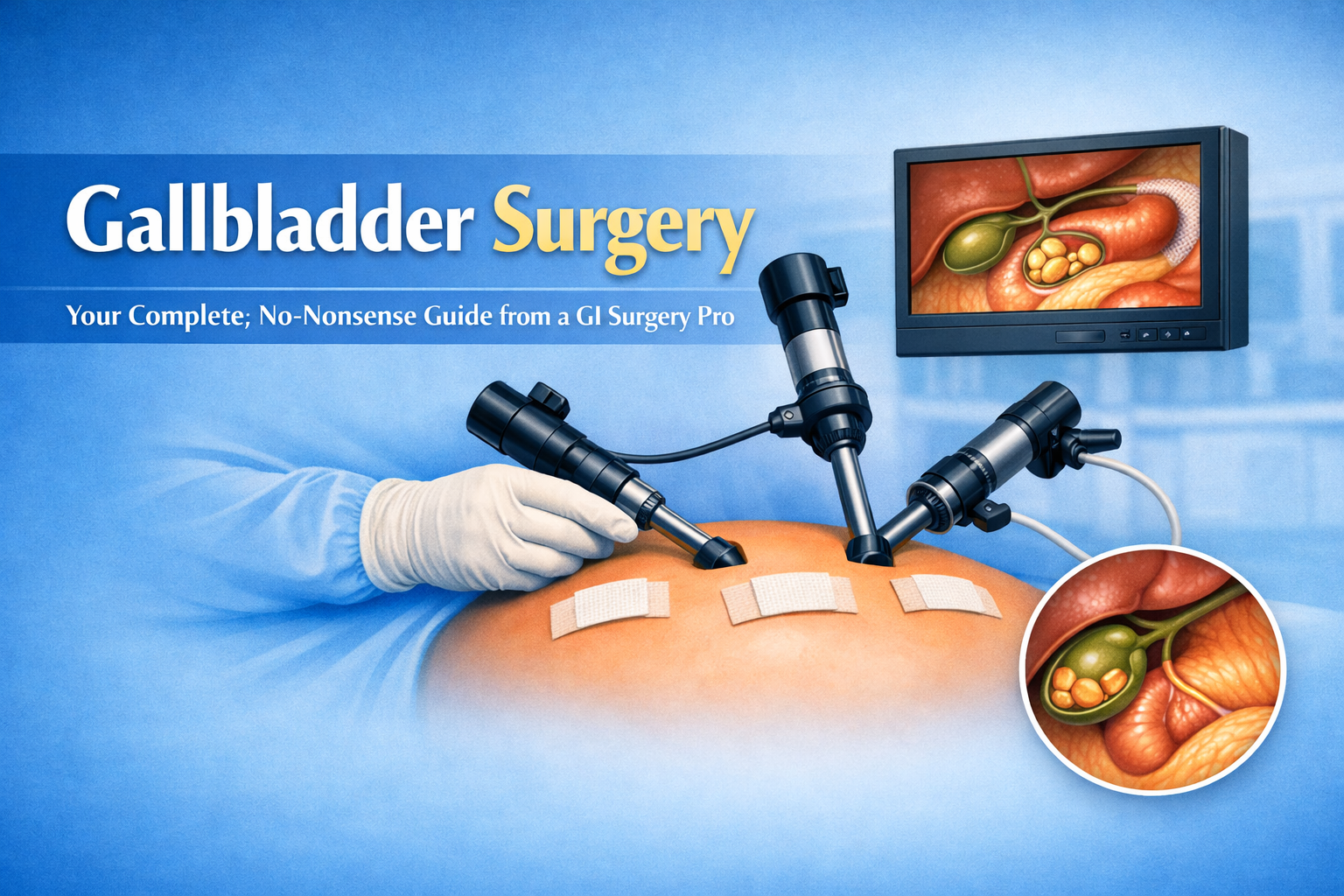
Gallbladder Surgery: Your Complete, No-Nonsense Guide from a GI Surgery Pro
Hello, everyone! Dr. Amit is back at you—a gastroenterological surgeon with over 15 years of practical experience, having removed many thousands of gallbladders, and helped a huge number of people regain their happy lives. If you have just been diagnosed with gallstones, have felt the pain after eating pizza, or are preparing yourself for surgery and need to get all the information about everything that awaits you in the near future, then you have come to the right place.
It is not an emergency clinic sheet, but rather a conversation in my office, in which I share with you every detail—what makes it essential to undergo surgical intervention, how it all takes place, and a whole lot of information regarding preparation and recovery process. Cholecystectomy, or gallbladder removal, is an extremely safe and common surgery. The number of people who have undergone this procedure in the country exceeds 700,000 each year in the U.S. alone (the success rate for this operation is 99%). You will no longer need to take trips to the hospital at midnight or worry about eating a high-fat diet again! Find out about patient experiences, surgeons’ clinical recommendations, and essential information after the operation from this article.
The Gallbladder 101: What It Does and Why It Rebels
First before we discuss scalpels let us get acquainted with your gallbladder; a small (approximately thumb size) pear shaped organ that sits underneath the liver to the right of center located in the upper right section of the abdomen; this organ serves the purpose of storing bile from the liver (this green/yellowish liquid produced by the liver is key in digestion…) until it is sent to your small intestines to break down fats turning greasy hamburgers into usable energy! What an awesome little helper, right?! But… when things go wrong… it becomes a traitor!
Gallstones (cholelithiasis), or stones formed by crystallizing bile, are produced through deposits of cholesterol, bilirubin, and/or calcium. There are several risks for forming gallstones, but a few of the more classic factors include: the “4 F’s” (female, 40’s, fat and fertile), rapid weight loss; diabetes; your personal/ family history; low fiber- high fat diet, and some type of medications, including your current estrogen use. Fair-skinned individuals of European descent show a larger number of cases, but it’s worldwide — 10-15% of the adult population have asymptomatic (silent) gallstones, so they may not ever know they exist. Those who will cause problems will experience symptomatic gallstones that obstruct the ducts.
Imagine having a stone become lodged in the cystic duct, or the exit of the gallbladder; this would cause waves of cramping pain located just under your right rib cage, which may radiate to the back or shoulder, and your pain could occur 30 minutes to several hours after you eat. You will also feel nauseated to the point where you cannot move/ will curl up. While biliary colic is harmless if it is short-lived, recurrent episodes should raise a red flag for surgery. If not treated, this will lead to acute cholecystitis due to continued obstruction, causing a Fever with chills, tenderness to touch (guarding), and a positive Murphy’s sign on ultrasound (pain when the probe is applied). Continued obstruction of the cystic duct may also lead to gangrene, perforation of the gallbladder, or an abscess.
Several reasons exist for surgery: choledocholithiasis (stones lodged in the common bile duct, yellow skin/eyes, dark-colored urine), gallstone pancreatitis (stone irritates the pancreas leading to severe mid-back pain with elevated enzyme levels), cholangitis (an infection of the bile ducts – may lead to sepsis), biliary dyskinesia (the gallbladder is lazy and has a low-functioning bile tests), large polyp(s) (greater than one centimeter in size are concerning for cancer), porcelain gallbladder (calcium deposits on the gallbladder walls may indicate an increased likelihood of malignancy), or gallbladder cancer (very rarely and if detected, will require a radical procedure). Acalculous cases generally occur in critically ill patients, where no stones are present, just sludge produced by fasting/ventilation.
Not rushing to OR? Asymptomatic stones often stay quiet (complication risk 1-2%/year), managed with diet/ultrasound watches. Pregnancy? Delay elective unless emergency. Comorbidities like frail elderly? Weigh benefits. But data screams: early elective surgery trumps crisis mode—shorter stays, fewer complications.
Surgical Procedures Deep Dive: From Keyhole to Open Access
More than 90 percent of gallbladder removals are performed using laparoscopy—an invasively minimal technique since 1988, reducing healing time from weeks to days. The decision depends on symptom intensity, scar presence, BMI, and surgical proficiency. This is the complete list.
Laparoscopic Cholecystectomy: Precision Through Tiny Ports
General anesthesia sends you to dreamland (propofol bliss). Four half-inch incisions: navel (specimen bag), epigastrium (camera), right upper quadrants (tools). CO2 insufflation creates a ballooned workspace. HD laparoscope beams Calot’s triangle (cystic duct/artery crux) on monitors. Critical view of safety (CVS): dissect fat, clear structures, double-clip before cutting—prevents bile duct injury (gold standard protocol).
Gallbladder freed from liver bed via electrocautery/hook, cystic artery/duct secured with locking clips (Hem-o-lok safe), specimen deflated/extracted in Endobag (prevents spill/stones lost). 45-90 minutes for straightforward ones; inflamed ones take longer. Ports out, skin glued/striped, done. Conversion to open? 2-5% (adhesions, bleeding, unclear anatomy). Outpatient 80%—home same evening.
Sarah’s story: 38-year-old teacher, three colic episodes. Lap chole, Netflix that night, teaching Tuesday. “Pain-free feasts now!”
Open Cholecystectomy: The Robust Backup
5-10% of cases: severe phlegmon (scarred mess), suspected perforation, cancer, or lap fails. 6-10-inch subcostal incision exposes the field. Kocherize the duodenum, dissect the triangle, same clipping, but direct palpation handles ooze or stones. Common bile duct exploration (CBDE) if dilated/stones: T-tube drains bile post-clearance. 1-2 hours, 2-5 day stay, 4-6 week full recovery. Higher infection (5%), but excellent for complex.
Next-Gen Twists: Robotic, SILS, and ERCP Buddies
Robotic (da Vinci): Lap ports + console control—7-degree wristed arms, 3D magnified views excel in obese (better reach) or redo cases. Setup adds 15-30 mins, costlier, but less conversion, pain. Single-incision laparoscopic surgery (SILS): All via navel, scar-hidden cosmetic win, though technically demanding (triangulation tough). ERCP combo: Pre/post-op endoscopic sphincterotomy clears duct stones (90% success).
Intraop imaging: Cholangiogram (contrast via duct clip hole) maps anatomy/stones—routine in some centers, selective others. Drains? Only if leak worry.
Preoperative Mastery: Your Two-Week Power-Up
The majority of your overall success will be a result of preparation. The ERAS protocol has shown that it can reduce the number of complications experienced by approximately 30%. In preparation for the pre-operative portion of your case, please see the following consultation from your physician; the areas you should review: 1st and 2nd week.
You should gather the following: (1) history taking including any medications that may be causing your pain, allergies (possible allergies), and family history of gallstones; (2) complete physical examination (including Murphy’s sign) and looking for jaundice; (3) imaging studies (including ultrasound, HIDA scan (to assess the function of gall bladder), and either MRCP or EUS to help interpret biliary duct). Laboratory tests may include CBC (increased risk of infection), liver function tests to determine an increase in bilirubin and alkaline phosphatase, amylase and lipase to check for problems with the pancreas, coagulation tests to check for potential bleeding, and/or a pregnancy test.
Optimize: Low-fat diet (bland carbs, lean proteins—think oatmeal, grilled fish) quiets symptoms. Weight loss of 5-10 lbs if obese eases lap access. Smoking cessation (4 weeks min—lung function jumps). Hold NSAIDs/aspirins 7-10 days, adjust diabetes/BP meds. Bowel prep rare; antibiotics IV day-of.
Night before: Carb drink (clear sports beverage) loads glycogen, halves nausea. NPO solids 6-8 hours, clears 2. Shower with chlorhexidine. Pack: Loose clothes, ride home, ice packs.
Day-of ritual: Admit, IV lock (hydration, meds), pre-op antibiotics (cefazolin), consent (risks: duct injury 0.4%, infection 1%). Sedation eases nerves. Family lounge briefed. OR in minutes—calm waters ahead.
OR Insider: Hour-by-Hour Theater
Anesthesia induction: Mask oxygen, propofol (milk of amnesia), fentanyl/midazolam calm, and rocuronium paralyzes. Intubate, ventilator hums. Foley catheter (empty bladder, rare now). Sterile drape, ports placed under vision (Veress needle or Hassan for access). Insufflation to 12-15 mmHg.
Dissection ballet: Grasp gallbladder fundus, retract cephalad; lateral retractor clears triangle. CVS achieved: hepatocystic triangle cleared of fat/fibrosis, duct/artery skeletonized, lower gallbladder freed. Clip-cut, detach from liver (hydrodissection if adherent). Bag it, morcellate, extract. Irrigate, suck gas, hemostasis (no drains usually). Skin approximated, local anesthetic infiltrated. Extubate, PACU wheels.
Open variant: Self-retaining retractors, Bovie cautery, same logic. Wake-up groggy but stable—shoulder twinges from diaphragm irritation (gas referral).
Postoperative Roadmap: From PACU to Peak Performance
Day 0 (Surgery Day): PACU 1-2 hours—vitals rock-solid, pain scored (4-6/10 typical, multimodal: Tylenol IV, toradol, low-dose opioid). Shoulder pain? Gas walks it off. Sips ginger ale, crackers if no nausea (ondansetron magic). Pee? Good. Discharge if eating/walking/pain controlled—80% laps.
Days 1-3: Home Stretch
Mild soreness peaks on day 2, fades. Incisions: Band-Aids/showerproof, pat dry. Walk 5-10 mins hourly (lungs clear, clots flee). Diet evolution: Clear to low-fat full (broth, toast, yogurt, banana BRAT). Bloating? Simethicone, heat pad. No driving/lifting >10lbs. Fatigue/anesthesia hangover normal—nap away. Constipation (opioids)? Colace + prune juice.
John, 52, mechanic: Lap, home day 1, wrenching light week 2. “No more grease-induced agony!”
Week 1-2: Momentum Builds
Shower daily, tape falls off. Pain? OTC suffices. Desk work day 3-5. Drive day 4 if twisting painless. Stairs/walks ramp to 20-30 mins. Fat tolerance test: Small avocado portions. Follow-up day 7-10: Pathology (adenomyosis common, cancer 0.5%), staples out if open.
Weeks 3-6: Normalcy Returns
Gym: Cardio week 3, weights 4-6 (lap quicker than open). Scar massage (bio-oil). Open patients: 6 weeks full. Most 95% symptom-free by month 1.
Months 2-12: New Normal
Liver compensates—steady bile drip handles fats. Diarrhea (post-cholecystic syndrome, 10-15%)? Soluble fiber, bile binders (cholestyramine), probiotics. Weight? Stable if habits hold. Scars pale to lines.
Slowers: Smokers (add 1 week), diabetics (glucose tight), obese (lap harder). Track app: Pain, bowels, energy.
Pro Hacks for Flawless Recovery
Pain/Poison Ivy: Ice 15/15, alternate Tylenol/ibuprofen. Acupressure bands for nausea.
Gut Game: 25g fiber day 1 (psyllium), 2.5L water. Fermented foods rebuild the microbiome.
Move Smart: Posture perfect, no Valsalva (hold breath straining).
Sleep/Wound: Elevated right side, inspect daily (red/hot/drain/fever>100.4? Culture/antibiotics).
Work/Life: Sedentary 1 week, manual 4-6. Kids? Help week 1. Intimacy: When comfy.
Diet Long-Term: Balanced fats (nuts, olive oil)—no forever bland. 80% eat freely in year 1.
Red Flags: Persistent vomiting (ileus/stone), jaundice (leak 0.3%), severe pain (abscess). ER or call—swift fixes.
Risks Real Talk: Low Odds, High Vigilance
Mortality 0.1-0.5% (older, sicker, higher). Major bile duct injury 0.2-0.5% (reconstructible). Wound infection 1-2% lap vs. 5-10% open. Bleeding, pneumonia (incentivize deep breaths), DVT (early walk). Retained stones (ERCP). Cancer upstaging (radical if needed). Expertise matters—high-volume centers shine. Pre-op chat personalizes.
Beyond Surgery: Lifelong Wins and Prevention
No gallbladder? Millions thrive—digestion adapts. Prevent family stones: Mediterranean diet, exercise, steady weight. Yearly, the US is at high risk.
Maria, 45: “The diarrhea phase is over, I’ve been eating oats, and I can now travel without any problems.”
FAQs Unlocked:
- Pain level? 3-5/10, gone week 2.
- Weight change? None of the calories match.
- Regret rate? <1%.
- Flying? Week 2 lap.
- Cost? $10-20k insured often covers.
Heartfelt Send-Off
Gallbladder surgery? Your ticket to digestive freedom. Arm yourself with knowledge, lean on your team, heal proactively—you’ll emerge stronger. Helped a friend? Share this. Questions? Comments open—here for you always!